W123 300D – Climate Control Part II
Last time we looked at the Automatic Climate Control, I had just checked out the potentiometer that is used to select the desired cabin temperature.
The Bosch Temperaturregler
Next I opted to examine the Temperaturregler, which is the climate control computer, I chose this because for ease of access. When I opened it up and saw the black burn mark on along a single trace on the board, my heart lurched … was this something that I could fix or would I need a new unit?
Well I had a few things in my favour there, it is a single layer board, it uses only through hole components, so Bosch made it repairable. I knew that the electrolytic capacitors were most likely dried out and out of tollerance, so my goal was to change them out. I sat down, made a parts list and put an order in with Farnell/Newark, of course I had to buy multiples of what I needed and probably could have gotten away without changing the film capacitors, but for $21 I was able to buy replacements for all the capacitors.
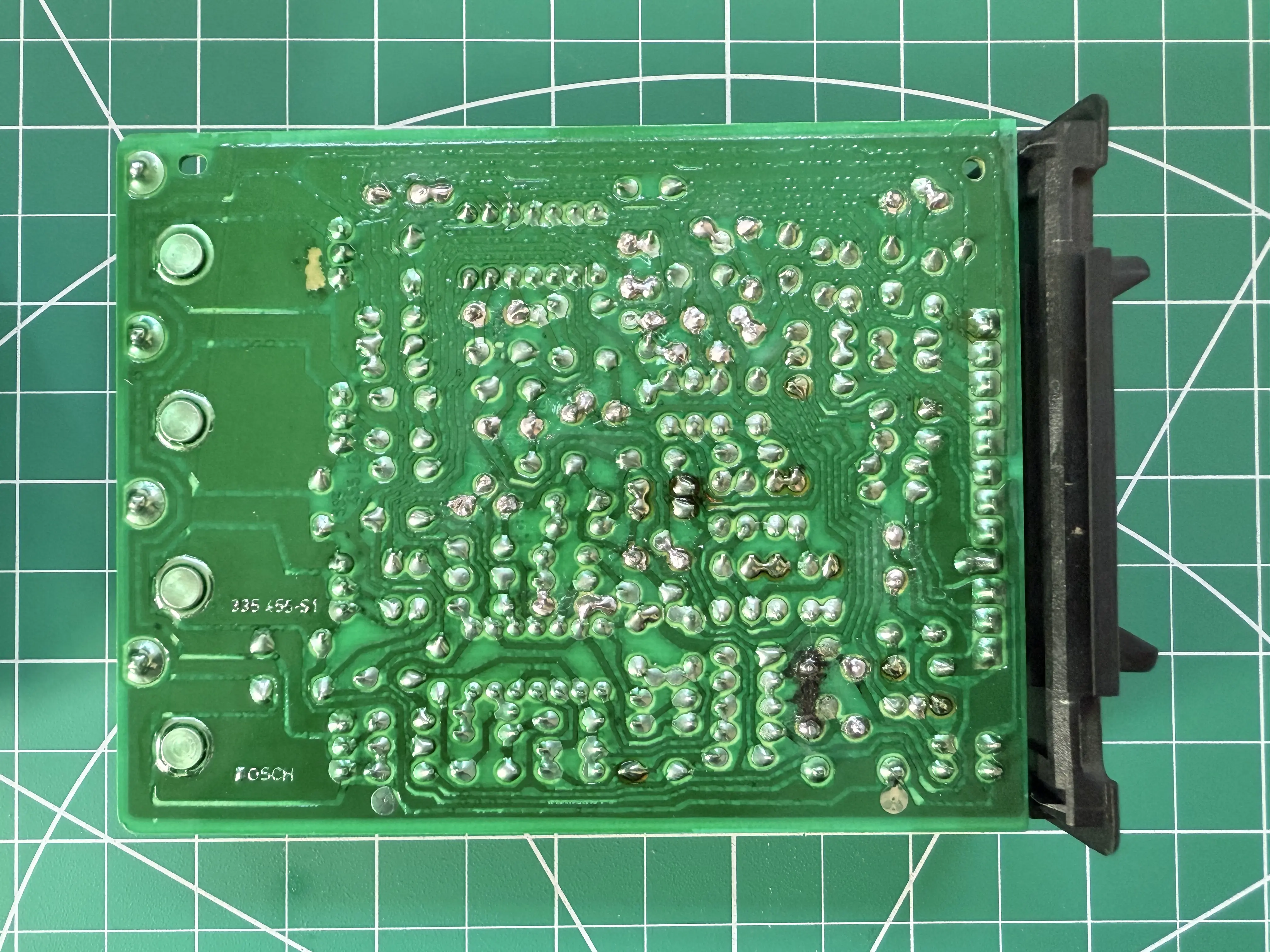
The scorch mark can be seen on the bottom right-hand side of the board.
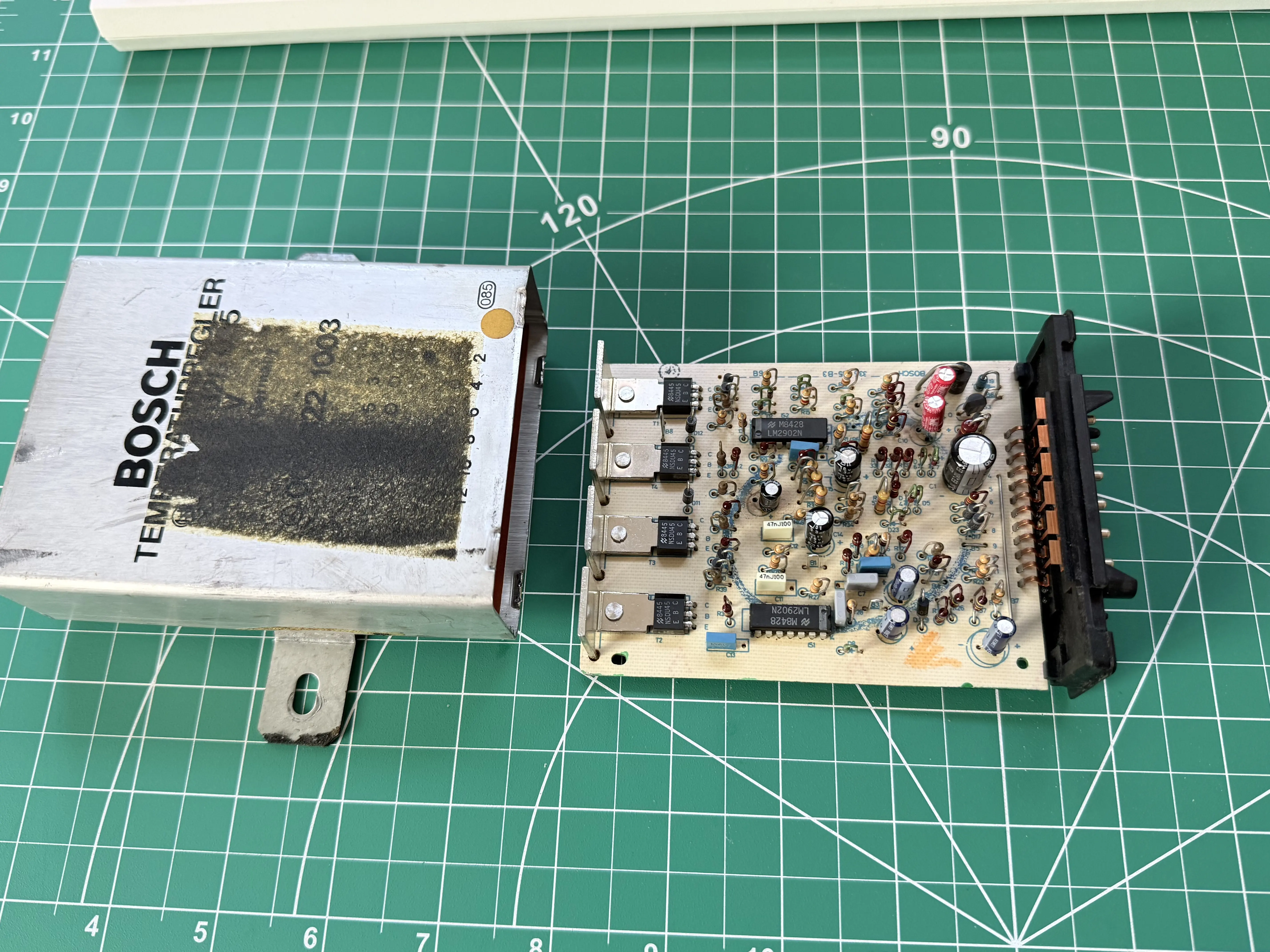
After the job is done, the two red electrolytic capacitors were where the most leaking had occurred but the board seemed to be OK.
Bill of Materials for capacitors
Find BOM
| Value | Quantity |
|---|---|
| 4n7 J100 | 2 |
| 10n K100 | 3 |
| ∇47n M63 | 2 |
| 3.3μ 16V | 2 |
| 22μ 35V | 1 |
| 47μ 10V | 2 |
| 100μ 10V | 3 |
| 470μ 25V | 1 |
I unfortunately didn’t take any photos of the soldering process, I’m not practiced at soldering nor am I any more practiced at taking photos of my activities. From measuring the capacitors that came out, only 3 were still in tollerance, so replacing them was a good move whether it fixed the problems or not.
In addition to this I replaced the in–cabin temperature sensor, a pretty simple thermistor, where the climate control blower draws air across the thermistor to gauge the cabin temperature. These are very hard to obtain new these days but I was able to pick up a used one online. Replacing the thermistor seems to have been the key for me, I now have good control and importantly cold A/C, the system does struggle to keep up on days above 36ºC1 and particularly in stop and go traffic, the W123 is known to have poor heat and cool air when the car is at or near idle.
In the 1985 model and with respect to the cool air, this is caused on purpose due to the so called “Kilma” relay which takes number of inputs (engine RPM, engine temperature, throttle position, refrigerant pressure, etc.) and decides whether to enable the A/C compressor clutch, this allows the car to disengage the compressor when pulling away from a stop, when the engine is under too much load, when there is not enough gas in the A/C system, etc. But most of all when the engine is idling (at ~750 rpm) it just is not turning the compressor enough to create enough refrigeration on a hot day.
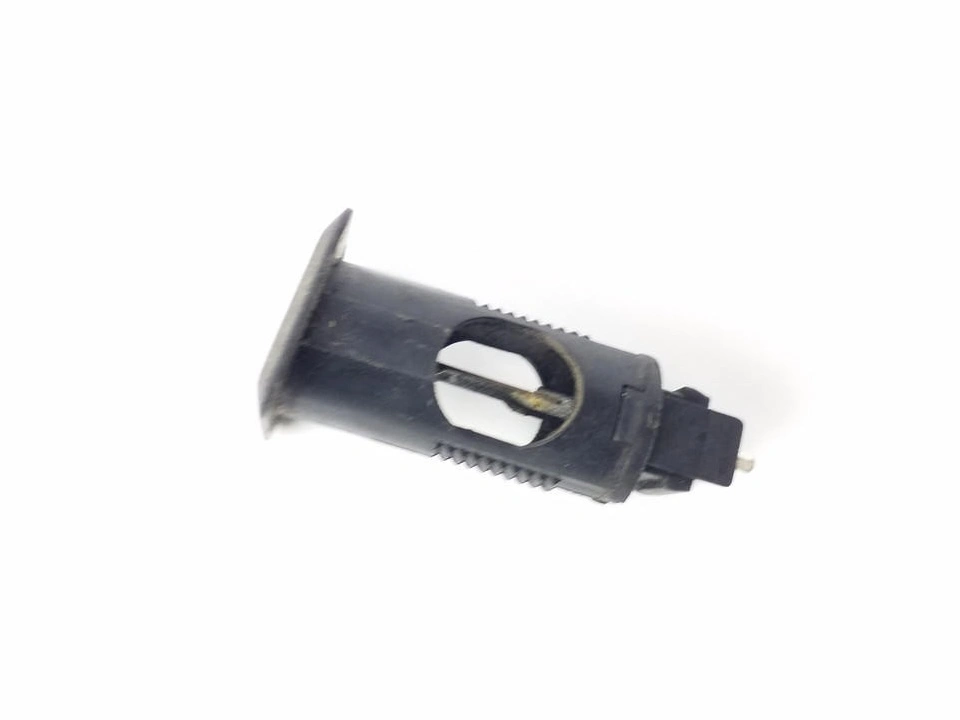
Side view of the thermistor, source https://mbzparts.com
As best I can tell (at the moment) is that the climate control system works with two resistor-capacitor (RC) oscillators, one for the actual cabin temperature and one for the desired cabin temperature. I have a service manual for the climate control systems, so I could investigate this further and understand exactly how these oscillators are controlling the MOSFETs for the blower and A/C – if my issue had not been fixed by the thermistor I’d probably be hunting this down now.
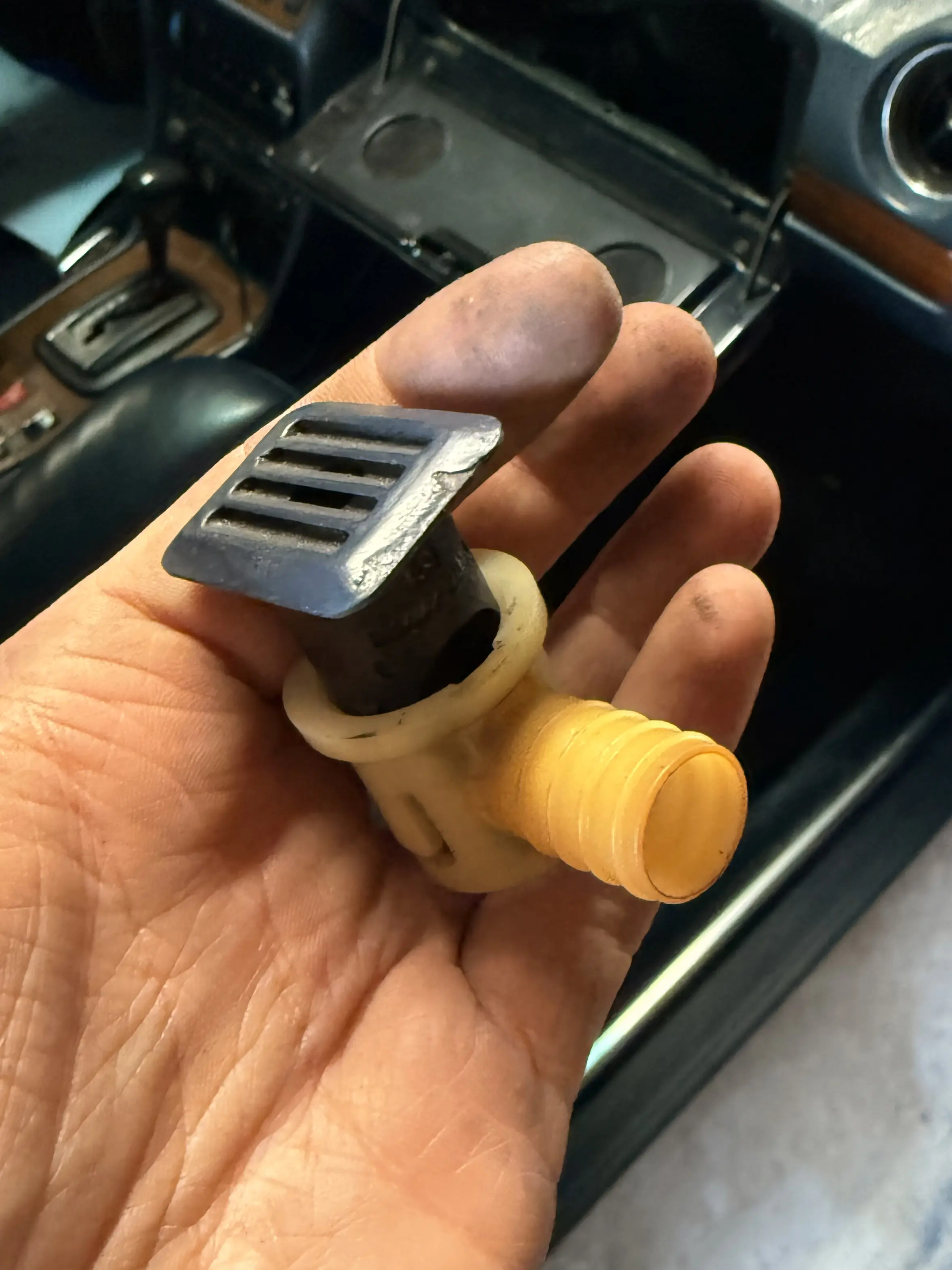
The outgoing thermistor in its housing.
-
I have some plans to enable full recirculation of air in the cabin for better performance on days like this. ↩︎